
Release date: October 15, 2026
Start of text box
Key findings
- Between 2016/2017 and 2022/2023, Indigenous (First Nations, Métis and Inuit) youth accounted for 27% of all accused in youth courts but 8% of the youth population in Canada. Relative to their representation in the youth population, Indigenous accused were overrepresented in youth courts in all regions.
- First Nations youth, Métis youth, Inuit youth and youth with multiple Indigenous identities were all overrepresented in youth courts. Three-quarters (76%) of Indigenous youth accused were First Nations people, 19% were Métis, 3% were Inuit and 1% had multiple Indigenous identities.
- According to the Adjusted Relative Rate Index (ARRI), which measures the likelihood of a selected group encountering a given court outcome relative to a reference group encountering the same outcome—while controlling for the severity of the offence—Indigenous youth accused were overall slightly more likely (+6%) than their White counterparts to receive a guilty decision in court (including guilty pleas) between 2016/2017 and 2022/2023. This, however, differed for Inuit youth specifically, as they were less likely (-10%) to receive a guilty decision than White youth.
- Stays of proceedings were more likely (+18%) among Indigenous youth than White youth. The disparity was even higher for First Nations youth (+22% compared to White youth), whereas the disparity was relatively smaller for Métis (+7%) and Inuit (+6%) youth.
- Overall, Indigenous youth were less likely (-16%) to have their case result in a withdrawal, dismissal or discharge than White youth. This remained true for
First Nations (-18%) and Métis (-12%) youth specifically, whereas Inuit youth
were more likely (+15%) to have such an outcome. - According to the ARRI, Indigenous youth found guilty of an offence were much more likely (+101%) than their White counterparts to receive a sentence of custody (including supervision) between 2016/2017 and 2022/2023. The disparity in custody sentences reached its highest point during the reference period in 2021/2022 (+200%).
- Among those who received a guilty decision, Indigenous youth were less likely (-10%) than White youth to receive probation as their most serious sentence. They were, however, more likely (+15%) to receive sentences of fines or community service.
- Indigenous youth who received a guilty decision were more likely (+26%) than guilty White youth to receive a sentence introduced under the Youth Criminal Justice Act (e.g., deferred custody and supervision, intensive support and supervision).
End of text box
In Canada, youth aged 12 to 17 who come in contact with the criminal justice
system are treated under a legislative framework distinct from the one that
applies to adults.Note The Youth Criminal Justice Act (YCJA), enacted in 2003, emphasizes that youth are to be held accountable for their criminal behaviour in a way that is proportionate to their level of development and the seriousness of the offence they committed (Youth Criminal Justice Act, 2002). This is reflected in the YCJA’s focus on extrajudicial measures,Note which aim to divert youth outside of the formal court system at multiple stages of the criminal justice process (Bourgon, 2025). The Act also stipulates that custody is to be reserved for the most serious cases (Youth Criminal Justice Act, 2002).
Although the YCJA aims to reduce the reliance on court-based interventions and limit the use of custodial sentences (Youth Criminal Justice Act, 2002),
administrative data and broader criminal justice research show that these objectives have not been experienced uniformly across all youth populations (Department of Justice Canada, 2024a; Love & Wiley, 2026; Sprott &
Manson, 2017; Statistics Canada, 2026a). Similar to the patterns
observed among Indigenous adults, Indigenous youth are overrepresented at every
stage of the criminal justice process in Canada, from initial contact with
police to court sentencing and custody (Alberton et al., 2023; Bressan & Coady, 2017; Clark, 2019; David & Mitchell, 2021; Department of Justice Canada, 2024b; Department of Justice Canada, 2019a; Doob & Sprott, 2007; Khorrami & Paquin-Marseille, 2025; Malakieh, 2018; Robinson et al., 2023; Statistics Canada, 2026a). This persistent overrepresentation is linked to several historical and ongoing factors—including colonization, the residential school system, the Sixties Scoop and the continued displacement of Indigenous children and youth away from their families into the child welfare system, intergenerational trauma, and systemic racism and discrimination—which have contributed to socioeconomic inequities and broader patterns of marginalization (Aguiar & Halseth, 2015; Bombay et al., 2009; National Inquiry into Missing and Murdered Indigenous Women and Girls, 2019; Truth and Reconciliation Commission of Canada, 2015) (see Text box 1). These factors influence Indigenous peoples’ experiences with social institutions—including the criminal justice system—and have contributed to patterns of contact that differ from those of non-Indigenous populations,
highlighting the importance of examining whether criminal justice pathways and
outcomes vary between Indigenous and White accused.
Using a linked data file from the Integrated Criminal Court Survey (ICCS) and the Census of Population, this Juristat article presents information on the court outcomes of Indigenous youth accusedNote and White youth accusedNote in youth courts in Canada from 2016/2017 to 2022/2023.Note The analysis primarily focuses on examining the disparities in court outcomes of these groups at the decision (e.g., guilty, stayed) and sentencing (e.g., custody, probation) stages of the court process using the Adjusted Relative Rate Index (ARRI; see Text box 2). Where possible, results are further disaggregated by Indigenous group—First Nations people, Métis and Inuit—to better reflect the different experiences and outcomes of these individuals, as Indigenous youth are not a homogenous group. Results are also presented by sociodemographic characteristics such as genderNote and age group.
It is important to note that the criminal justice system in Canada treats youth accused of a criminal offence differently than adults, in accordance with the provisions of the YCJA and its principle of diminished moral blameworthiness and culpability (Youth Criminal Justice Act, 2002). For this reason, drawing comparisons in court outcomes observed among youth to those observed among adults is not recommended.Note In addition, although this article does not account for the underlying drivers of court outcome disparities between Indigenous youth and White youth—such as the historical and ongoing consequences of colonization—these factors are recognized as integral to the interactions of Indigenous youth with the criminal justice system. The findings should therefore be interpreted within this broader, multifaceted context.
Characteristics of accused in youth courts
Indigenous youth are overrepresented as accused in youth courts
Between 2016/2017 and 2022/2023, there were approximately 30,530 cases
involving Indigenous (First Nations, Métis and Inuit) accused persons aged 12
to 17 completed in youth courts in Canada. Indigenous youth represented 27% of
all accused in youth courts over this period (Table 1).Note For reference, according to the 2021 Census of Population, 8% of the total youth population in Canada was Indigenous. In comparison, White youth represented 52% of accused in youth courts between 2016/2017 and 2022/2023, but they accounted for 60% of the total youth population in Canada in 2021.
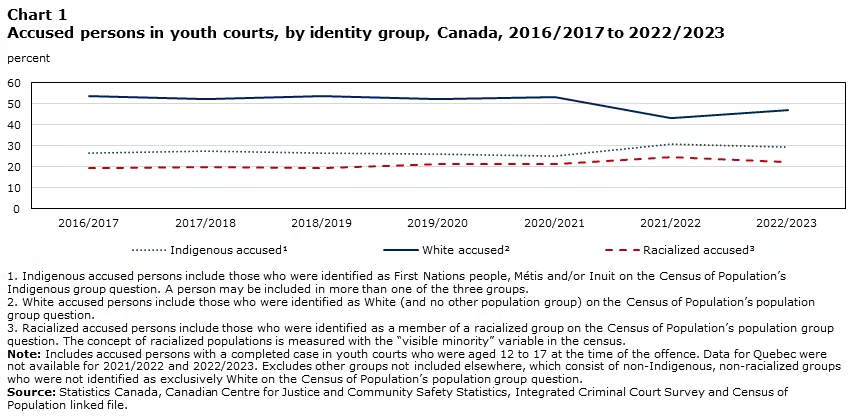
The proportion of Indigenous youth accused fluctuated over the reference period; the lowest proportion being 25% in 2020/2021 and the highest, 31% in 2021/2022 (Chart 1). In contrast, the proportion of White youth accused was stable between 2016/2017 and 2020/2021, before declining to 43% in 2021/2022, its
lowest point during the reference period.
Chart 1 start
Data table for Chart 1
| Indigenous accused Data table for chart 1 Note 1 | White accused Data table for chart 1 Note 2 | Racialized accused Data table for chart 1 Note 3 | |
|---|---|---|---|
| percent | |||
| |||
| 2016/2017 | 27 | 53 | 20 |
| 2017/2018 | 27 | 52 | 20 |
| 2018/2019 | 26 | 53 | 20 |
| 2019/2020 | 26 | 52 | 21 |
| 2020/2021 | 25 | 53 | 21 |
| 2021/2022 | 31 | 43 | 25 |
| 2022/2023 | 30 | 47 | 22 |
Chart 1 end
Of the Indigenous youth in court over this period, 76% were First Nations people, 19% were Métis, 3% were Inuit and 1% had multiple Indigenous identities (Table 2).Note Compared with their representation in the total youth population in Canada in 2021, First Nations youth, Métis youth, Inuit youth and youth with multiple Indigenous identities were all overrepresented in youth courts, with First Nations youth being overrepresented to the largest degree.Note In total, Indigenous accused and White accused accounted for four in five (79%) accused persons in youth courts between 2016/2017 and 2022/2023. The remaining youth accused were members of a racialized groupNote (21%) or another groupNote (1%).
Indigenous accused were overrepresented in youth courts across the country between 2016/2017 and 2022/2023. Notably, Indigenous youth accounted for 43% of the youth court population in British Columbia combined with the territoriesNote (Chart 2), which was nearly four times higher than their representation in the total youth population of this region (12%). Indigenous youth were also largely overrepresented in the Prairie provinces, where they accounted for 56% of the youth court population compared with 17% of the total youth population of these provinces. Indigenous youth were also notably overrepresented in youth courts in Ontario (13% versus 4%).Note
Chart 2 start

Data table for Chart 2
| Province or region | Youth court population Data table for chart 2 Note 1 | Youth population (Canada) |
|---|---|---|
| percent | ||
|
Note: Includes accused persons with a completed case in youth courts who were aged 12 to 17 at the time of the offence. Indigenous accused persons include those who were identified as First Nations people, Métis and/or Inuit on the Census of Population’s Indigenous group question. A person may be included in more than one of the three groups. Data for Quebec were not available for 2021/2022 and 2022/2023. The youth population is based on data from the 2021 Census of Population. There are many factors that may influence variations between jurisdictions, comparisons should be made with caution. Source: Statistics Canada, Canadian Centre for Justice and Community Safety Statistics, Integrated Criminal Court Survey and Census of Population linked file. | ||
| Atlantic provinces Data table for chart 2 Note 2 | 18 | 8 |
| Quebec | 6 | 3 |
| Ontario | 13 | 4 |
| Prairie provinces Data table for chart 2 Note 3 | 56 | 17 |
| British Columbia and the territoriesData table for chart 2 Note 4 | 43 | 12 |
| Canada | 27 | 8 |
Chart 2 end
Start of text box 1
Text box 1
Overrepresentation of Indigenous people in the criminal justice system
It is well documented that Indigenous (First Nations, Métis and Inuit) people are overrepresented in the criminal justice system in Canada, both as victims and
survivors of crime, and as accused persons (Alberton et al., 2023; Bressan & Coady, 2017; Clark, 2019; David & Mitchell, 2021; Department of Justice Canada, 2024b; Department of Justice Canada, 2019a; Doob & Sprott, 2007; Khorrami & Paquin-Marseille, 2025; Malakieh, 2018; Robinson et al., 2023; Statistics Canada, 2026a). This overrepresentation is closely linked to the historical and ongoing impacts of colonial
policies and practices, including residential schools, the Sixties Scoop (i.e., the removal of Indigenous children from their families into the child welfare system), and forced separation and relocation from Indigenous families and communities (Aguiar & Halseth, 2015; Bombay et al., 2009; Department of Justice Canada, 2025; National Inquiry into Missing and Murdered Indigenous Women and Girls, 2019; Truth and Reconciliation Commission of Canada, 2015). These policies have contributed to long‑term inequalities, socioeconomic disadvantage and intergenerational trauma that continue to shape the present‑day experiences and outcomes of Indigenous people in Canada. Systemic racism within various social institutions, including the criminal justice system (police, courts and corrections), further perpetuates these disparities.
Although much of the existing research surrounding overrepresentation of Indigenous people in the criminal justice system has focused on adults, Indigenous youth are also disproportionately represented in the criminal justice system. Compared with non-Indigenous youth, Indigenous youth experience higher levels of police contact, court involvement and custodial sentences. For example, Indigenous youth are more likely to experience over-policing through more frequent police stops, increased surveillance and higher charging rates than non-Indigenous youth, which can contribute to earlier and more persistent
involvement in the criminal justice system (Alberton et al., 2023; Clark, 2019; David & Mitchell, 2021; Department of Justice Canada, 2025; Department of Justice Canada, 2019a; House of Commons Canada, 2021; National Inquiry into Missing and Murdered Indigenous Women and Girls, 2019; Truth and Reconciliation Commission of Canada, 2015; Venczel, 2024). Research has also shown that disparities exist in the use of police-level extrajudicial measures—such as warnings, cautions and referrals—which are intended under the Youth Criminal Justice Act to divert youth away from formal charges (Bourgon, 2025). Some have suggested that Indigenous youth are less likely than non-Indigenous youth to benefit from these diversion options, potentially contributing to earlier and more frequent entry into the court system (Department of Justice Canada, 2021b). In court, Indigenous youth can face systemic disadvantages in court processes such as limited access to culturally appropriate legal supports and biases that can influence charging, plea bargaining and sentencing outcomes (Clark, 2019; Legal Aid Ontario, 2021; Office of the Correctional Investigator, 2013; Royal Commission on Aboriginal Peoples, 1996; Rudin, 2005; Truth and Reconciliation Commission of Canada, 2015). Indigenous youth also frequently receive custody sentences at much higher rates than non-Indigenous youth, which is disproportionate to their representation in the youth population (Department of Justice Canada, 2024b; Office of the Correctional Investigator, 2022). For example, in 2022/2023, Indigenous youth accounted for 41% of the youth admissions to correctional facilities (Statistics Canada, n.d.), despite representing 8% of Canada’s youth population.
In recent years, sustained efforts have been made to reduce the overrepresentation of Indigenous people in the criminal justice system, and various commissions and inquiries have continued to highlight the need to address these persistent disparities (Assembly of First Nations, 2025; Congress of Aboriginal Peoples, 2024; National Inquiry into Missing and Murdered Indigenous Women and Girls, 2019; Truth and Reconciliation Commission of Canada, 2015). Key Supreme Court of Canada decisions, R. v. Gladue (1999) and R. v. Ipeelee (2012), affirmed that the history of Indigenous populations—including historical and systemic factors—must be considered when sentencing Indigenous offenders as these factors may have impacted an Indigenous person’s circumstances and contributed to their involvement with the criminal justice system. Culturally appropriate alternatives to custody must also be evaluated. In some jurisdictions, Gladue courts have been established, which provide a specialized setting where Gladue principles are applied more consistently through dedicated processes, reports and supports, helping ensure that sentencing decisions reflect the unique circumstances of Indigenous people (Maurutto & Hannah-Moffat, 2016). Many judges in various jurisdictions have also undertaken Gladue-related training to strengthen their understanding of Indigenous histories to appropriately apply Gladue principles. Additional initiatives, such as the Indigenous Courtwork Program (Department of Justice Canada, n.d.-a),
community‑based justice programs such as the Indigenous Justice Program (Department of Justice Canada, 2021a), restorative justice approaches,Note Note and Indigenous‑led services have also been established to provide culturally grounded alternatives to traditional court processes.
However, despite these efforts, evidence continues to show that disparities in criminal justice outcomes persist for Indigenous adults and youth in Canada (Clark, 2019; Department of Justice Canada, 2024b; Khorrami & Paquin-Marseille, 2025; Saghbini et al., 2021). Structural inequities, limited availability of culturally appropriate programming and the inconsistent application of Gladue principles contribute to ongoing challenges in reducing overrepresentation (Department of Justice Canada, 2023; Ndegwa et al., 2023). Critics have also argued that many of these initiatives and approaches do not adequately address the root causes of overrepresentation and limit progress on reconciliation (Department of Justice Canada, 2023; Truth and Reconciliation Commission of Canada, 2015).
Ongoing data collection, collaborative analysis and engagement with Indigenous
communities remain essential to understanding and addressing the factors that
shape Indigenous peoples’ experiences within the criminal justice system.
End of text box 1
While most youth accused are boys, girls account for a larger proportion of accused among Indigenous youth than White youth
Between 2016/2017 and 2022/2023, two-thirds (66%) of Indigenous youth accused were boys (Table 2).Note Girls accounted for a larger proportion of accused among Indigenous youth (34%) than White youth (22%).
Among Indigenous youth, just over half (54%) of accused were aged 16 to 17, while the remainder (46%) were aged 12 to 15. The age distribution of White youth was similar (56% and 44%, respectively).
Violent offences represent a smaller share of cases among Indigenous youth than White youth
Cases where a violent crime was identified as the most serious offence were the most common among both Indigenous youth (37%) and White youth (47%) accused between 2016/2017 and 2022/2023 (Table 2); however, proportionally, violent offences represented a much larger share of the total caseload among White youth.Note Note This disparity may reflect differences in police-level diversion practices. Existing research suggests that systemic biases often result in fewer diversionary outcomes (such as warnings or referrals) for Indigenous youth, who are consequently more likely than their non-Indigenous counterparts to have less serious or non-violent incidents formally charged and processed by the courts (Corrado et al., 2014; Department of Justice Canada, 2025; Truth and Reconciliation Commission of Canada, 2015; Venczel, 2024). After violent crime cases, property crime offences made up the next largest proportion of cases among both Indigenous and White youth (32% and 28%, respectively).
Although administration of justice offence cases represented a small proportion of all
cases completed in youth courts for both Indigenous (11%) and White (5%) accused
over the study period, they accounted for a larger proportion of the total
caseload for Indigenous youth than White youth. This category includes the
offences of failure to appear in court, breach of probation, failure to comply
with a court order and being unlawfully at large, among others. Most of these
offences are related to an individual not abiding by a pre-trial condition or a
sentence that was imposed for a previous criminal offence and are an indication
of prior involvement with the criminal justice system (Burczycka &
Munch, 2015).
Previous research has suggested that Indigenous people are more likely than their non-Indigenous counterparts to be charged and convicted of administration of justice offences (Orsi & April, 2013; Pedneault et al., 2024), often due to systemic barriers that result in more restrictive and unrealistic conditions for Indigenous offenders (Department of Justice Canada, 2021a). For instance, Indigenous people living in rural areas may receive bail conditions that are more difficult for them to abide by—such as staying away from certain individuals who may live close to them in their small, Indigenous communities—which can result in breaches of conditions and subsequently additional administration of justice charges in court. Research has also shown that administration of justice offences play a large role in reconvictions among both Indigenous and non-Indigenous populations (Burczycka et al., 2026), and that they create a “revolving door” for people already involved in the criminal justice system (Department of Justice Canada, 2021a).
In terms of gender differences among Indigenous youth accused, the same pattern emerged for boys and girls: violent offences were most common (37% among boys and 38% among girls), followed by property crimes (32%, respectively).
Relatively small proportions of boys (10%) and girls (13%) were accused of
administration of justice offences.
Some differences did emerge according to Indigenous group. Offence patterns for First Nations (37% violent offences, 32% property crimes and 11% administration of justice offences) and Métis (38%, 31% and 11%, respectively) youth followed the general trend. Among Inuit youth, a similar proportion were accused of property crime (34%); however, violent offences were more common (48%), while administration of justice offences were less common (4%).
Indigenous youth have more prior convictions than White youth
Research has shown that Indigenous people who encounter the criminal justice system are
more likely than their White counterparts to have prior convictions, a pattern
linked to longstanding disparities in policing and justice system responses (Burczycka et al., 2026; Statistics Canada, 2026b). For instance, Indigenous youth often experience over-policing and biased charging practices, both of which increase their likelihood of early involvement with the criminal justice system (Alberton et al., 2023; Clark, 2019; David & Mitchell, 2021; Department of Justice Canada, 2019a; House of Commons Canada, 2021; National Inquiry into Missing and Murdered Indigenous Women and Girls, 2019; Truth and Reconciliation Commission of Canada, 2015; Venczel, 2024). They are also disproportionately charged with
administration of justice offences—often linked to more restrictive conditions
and closer monitoring—which further contribute to the accumulation of prior convictions (Department of Justice Canada, 2021a).
Between 2016/2017 to 2022/2023, a larger proportion of Indigenous youth accused than White youth accused had at least one prior conviction (35% versus 22%) (Table 2), meaning that they had been found guilty of a criminal charge within the past 10 years.Note More specifically, it was slightly more common for Indigenous youth to have one to two prior convictions (10%) or three to four prior convictions (6%) compared with White youth (8% and 4%, respectively). However, the proportion of Indigenous youth who had five or more prior convictions was twice that of their White counterparts (19% versus 9%). When it came to prior convictions for a violent offence specifically, one in five (20%) Indigenous youth had such a conviction, compared to about one in seven (14%) White youth.
Among Indigenous youth, it was more common for boys (38%) than girls (30%) to have at least one prior conviction. The proportions of First Nations (36%) and Métis (35%) youth that had at least one prior conviction were similar, whereas this was much less common among Inuit youth (18%).
Start of text box 2
Text box 2
Adjusted Relative Rate Index
The analysis that follows focuses on disparities in court decision and sentencing
outcomes of Indigenous and White youth accused using the Adjusted Relative Rate
Index (ARRI). The ARRI measures the likelihood of a selected group (Indigenous
youth accused) encountering an outcome (e.g., guilty decision or custodial
sentence) relative to a reference group (White youth accused) encountering the
same outcome. The ARRI accounts for the severity of the most serious offence in
the case, which ensures that any observed differences in outcomes are not due
to differences in crime severity between the two groups.Note
In this article, ARRI values are presented as positive and negative percentages.
Positive percentages indicate that Indigenous youth accused are more likely to
experience a given court outcome relative to their White counterparts, while
negative percentages indicate that they are less likely. For the purposes of analysis, differences of 4% or less are considered to reflect no disparity between groups. In other words, if differences fall between -4% and +4%, Indigenous and White youth accused are considered equally likely to encounter the outcome in question.Note For more information on the ARRI, see Text box 3 in Khorrami & Paquin-Marseille, 2025.
The analysis of court decisions will focus on whether Indigenous youth are more or less likely than White youth to 1) be found guilty,Note 2) have their case stayed,Note or 3) have their charges withdrawn, have their case dismissed or be discharged before the trial.Note Due to small counts, disparities in acquittalsNote and other decisionsNote are not examined in this article.
The analysis of court sentences will focus on whether Indigenous youth who have been found guilty of an offence are more or less likely than White youth to
receive a sentenceNote of 1) custody (including supervision),Note 2) probation,Note 3) fine or community service, or 4) deferred custody and supervision or intensive support and supervision or an order to attend a non-residential program or a reprimand.Note Due to small counts, ARRI values could not be calculated by type of Indigenous group (First Nations people, Métis, Inuit) for the various sentence types, nor could they be calculated for length of custodial sentences, intensive rehabilitative custody and supervision sentences, conditional sentences and other youth sentences.Note For more information on youth sentences, see Text box 4.
End of text box 2
Disparities in court decisions
Indigenous youth overall slightly more likely than White
youth to receive a guilty decision between 2016/2017 and 2022/2023, but this
varied by year and differed for Inuit youth
Accused persons are required to plead guilty or not guilty when they first appear in court. If they plead not guilty, they may proceed to trial where they may be found guilty and convicted of an offence. In this article, “guilty decisions” include findings of guilt and guilty pleas.Note
According to the ARRI, which accounts for crime severity, Indigenous youth were overall slightly more likely (+6%) to receive a guilty decision than their White counterparts
between 2016/2017 and 2022/2023 (Table 3). This, however, varied by year. For instance, compared to White youth, Indigenous youth were 13% more likely to receive a guilty decision in 2017/2018, but they were 9% less likely in 2020/2021 (Chart 3). Notably, Indigenous youth were more likely than White youth to receive a guilty decision in five of the seven reference years.
Chart 3 start

Data table for Chart 3
| White accused persons Data table for chart 3 Note † | Guilty Data table for chart 3 Note 2 | Stay of proceedings Data table for chart 3 Note 3 | Withdrawal, dismissal, discharge Data table for chart 3 Note 4 | |
|---|---|---|---|---|
| Adjusted Relative Rate Index Data table for chart 3 Note 1 | ||||
| ||||
| 2016/2017 | 0 | 10 | 3 | -20 |
| 2017/2018 | 0 | 13 | -8 | -15 |
| 2018/2019 | 0 | 10 | 0 | -14 |
| 2019/2020 | 0 | 7 | 5 | -9 |
| 2020/2021 | 0 | -9 | 26 | -1 |
| 2021/2022 | 0 | 10 | 49 | -31 |
| 2022/2023 | 0 | -2 | 54 | -20 |
Chart 3 end
Between 2016/2017 and 2022/2023, First Nations and Métis youth were slightly more likely to receive a guilty decision than White youth (+5% and +10%,
respectively) (Table 4). In
contrast, Inuit youth were less likely (-10%) to receive a guilty decision
than their White counterparts.
Research has discussed the tendency among certain accused, including Indigenous persons, to accept guilty pleas to gain access to supports or programs that are contingent on doing so, or because they may hold a deep mistrust of the justice process (Bressan & Coady, 2017; Clark, 2019; Rudin, 2005). A lack of sufficient legal representation may also contribute to this pattern, as accused—and Indigenous accused in particular—may not receive adequate advice about their rights, the implications of a guilty plea, or the legal options available to them. National inquiries and evaluations have identified systemic barriers such as under‑resourced legal aid, limited access to culturally informed counsel, and inconsistent legal guidance as factors that can shape plea decisions among Indigenous people (Royal Commission on Aboriginal Peoples, 1996; Rudin, 2005; Truth and Reconciliation Commission of Canada, 2015). As a result, Indigenous accused may be more inclined to accept plea agreements or plead guilty prematurely, even when alternative pathways and viable defences exist (Clark, 2019; Legal Aid Ontario, 2021; Office of the Correctional Investigator, 2013).
Indigenous youth in Quebec (+7%), the Prairie provinces (+6%) and British Columbia combined with the territories (+6%) had slightly higher disparities for guilty decisions compared to White youth in those areas (Table 3).Note There was no disparity in guilty decisions between the two groups in the Atlantic provinces and Ontario.Note It should be noted that some provinces—such as New Brunswick, Quebec and British Columbia—use pre-charge screening, which is a formal process that involves the Crown prosecutor (as opposed to the police) determining whether a criminal charge is laid and proceeds to court. This practice generally results in higher proportions of guilty decisions and lower proportions of stays or withdrawals in these provinces, as only those charges that the Crown believes have a reasonable prospect of conviction are laid and proceed to court (Lindsay, et al., 2023; Public Prosecution Service of Canada, 2014).
Indigenous youth overall slightly more likely to receive a guilty decision regardless of gender and age group
Regardless of gender, Indigenous youth were overall slightly more likely than White youth to receive a guilty decision (+6% for boys and +7% for girls) between 2016/2017 and 2022/2023 (Table 3). These disparities were similar among First Nations and Métis youth. However, among Inuit youth, both boys and girls were less likely to receive a guilty decision compared to their White counterparts (both -9%) (Table 4).
Similarly, Indigenous youth were slightly more likely to receive a guilty decision whether they were aged 12 to 15 (+6%) or 16 to 17 (+5%) (Table 3). The difference remained higher for First Nations youth aged 12 to 15 (+5%) and Métis youth (+10% for both those aged 12 to 15 and those aged 16 to 17) (Table 4). In contrast, Inuit youth were
less likely to receive a guilty decision (-9% for those aged 12 to 15 and -11%
for those aged 16 to 17).
Regardless of most serious offence and prior convictions,
Indigenous youth slightly more likely to receive a guilty decision
Indigenous youth were slightly more likely than White youth to receive a guilty decision for nearly all types of crime between 2016/2017 and 2022/2023, including violent offences (+5%), property crimes (+7%), administration of justice offences (+6%) and other offencesNote (+6%) (Table 3). There was no disparity in guilty decisions for other Criminal Code offences, such as weapons offences.
Indigenous youth with no prior conviction (+6%) and with at least one prior conviction (+5%) were slightly more likely than their White counterparts to receive a guilty decision in court. This pattern generally remained regardless of the number of prior convictions, and for those with and without a prior conviction for a violent offence. As previously noted, Indigenous accused tend to have more previous convictions than their non-Indigenous counterparts, due to broader patterns of differential contact with the criminal justice system and systemic bias (Burczycka et al., 2026; Statistics Canada, 2026b). However, disparities in guilty decisions among those with no prior convictions indicate that these differences cannot be explained by criminal history alone.
Indigenous youth overall more likely than their White counterparts
to have their case stayed, with the highest disparity among First Nations youth
A stay of proceedings means that the Crown or judge stops the prosecution against the accused, and that the case is put on hold temporarily or permanently.Note Note Stays are not a finding of guilt or a determination of innocence and there are many reasons a case may be stayed in youth court—such as an abuse of process, infringement on the rights of the accusedNote and the use of diversionary measures (e.g., community service, writing an apology letter).
According to the ARRI, a stay of proceedings was overall more likely (+18%) among
Indigenous youth than White youth between 2016/2017 and 2022/2023 (Table 3). The disparity for stays of
proceedings has increased year over year since 2018/2019, with Indigenous youth
far more likely (+54%) to encounter a stay of proceedings in 2022/2023 (Chart 3). First Nations (+22%) youth were far more likely to encounter a stay of proceedings than White youth between 2016/2017 and 2022/2023, while the differences—compared to White youth—were slightly higher for Métis (+7%) and Inuit (+6%) youth (Table 4).
It is possible that the use of post-charge diversionary measures aimed at
supporting Indigenous youth contributes to this disparity, as these approaches
may result in a greater proportion of charges being stayed or withdrawn in
court. In addition, research has suggested that over-policing and differential
charging practices affecting Indigenous populations may increase the likelihood
that Indigenous youth are charged in situations where non‑Indigenous
youth may be diverted earlier in the process or not charged at all (Alberton
et al., 2023; Clark, 2019; David & Mitchell, 2021; Department of Justice Canada, 2019a; House of Commons Canada, 2021; National Inquiry into Missing and Murdered Indigenous Women and Girls, 2019; Truth and Reconciliation Commission of Canada, 2015; Venczel, 2024). These systemic factors can lead to a higher volume of cases involving Indigenous youth entering the court system, which in turn may influence observed disparities in the proportion of charges that are ultimately stayed or
withdrawn.
In general, Indigenous youth were overall more likely to encounter a stay of
proceedings regardless of their gender (+18% for boys and +16% for girls) and age group (+18% for those aged 12 to 15 and +19% for those aged 16 to 17) (Table 3). Compared to White youth, the disparity was highest for First Nations boys (+23%) and girls (+19%), while the disparity was relatively smaller among Métis boys and girls (+6% and +5%, respectively), and Inuit boys (+5%) (Table 4). A pattern similar to gender emerged for age, with the largest differences noted among First Nations youth (+22% for those aged 12 to 15 and +23% for those aged 16 to 17).
Stays of proceedings more likely for Indigenous youth regardless of most serious offence and prior convictions
Between 2016/2017 and 2022/2023, Indigenous youth were more likely than White youth to encounter a stay of proceedings regardless of the most serious offence in the case, whether it was a violent offence (+19%), a property crime (+17%), an
administration of justice offence (+17%), another Criminal Code offence
(+24%) or another offence (+18%) (Table 3). This disparity remained whether Indigenous youth had at least one prior conviction (+19%) or no prior conviction (+18%).
Indigenous youth overall less likely than their White counterparts
to have their case withdrawn, dismissed or discharged, but this differed for
Inuit youth
In youth courts, proceedings may conclude through a withdrawal, dismissal or
discharge. These outcomes are grouped for this analysis as they all represent
the ending of formal criminal proceedings. A withdrawal occurs when the Crown
discontinues a prosecution, typically due to an insufficient prospect of
conviction or because the proceedings do not serve the public interest. A
dismissal is ordered at the discretion of the presiding judge, whereas a
discharge may occur following a preliminary inquiryNote where evidence is deemed insufficient to proceed to trial. In addition, a discharge may be granted when a court refers an accused to alternative or extrajudicial measuresNote and restorative justice programs.Note Note
According to the ARRI, Indigenous youth were less likely (-16%) to have their case result in a withdrawal, dismissal or discharge than their White counterparts between 2016/2017 and 2022/2023 (Table 3). This pattern was consistent year over year, except in 2020/2021 when there was no disparity—likely the result of courts shifting their operations during the onset of the COVID-19 pandemic (Chart 3). The largest difference was noted in 2021/2022, when Indigenous youth were far less likely (-31%) to receive a withdrawal, dismissal or discharge than White youth.
First Nations (-18%) and Métis (-12%) youth were less likely to experience a
withdrawal, dismissal or discharge between 2016/2017 and 2022/2023 (Table 4). Inuit youth, however, were more
likely (+15%) than their White counterparts to have this outcome.
Regardless of gender and age group, Indigenous youth were less likely to experience a withdrawal, dismissal or discharge (-16% for both boys and girls, and -16% for those aged 12 to 15 and -15% for those aged 16 to 17) between 2016/2017 and 2022/2023 (Table 3). This disparity was similar for First Nations and Métis youth. Inversely, Inuit youth were more likely to have this outcome (+15% for both boys and girls, and +14% for those aged 12 to 15 and +17% for those aged 16 to 17) (Table 4).
Withdrawals, dismissals and discharges less likely for Indigenous
youth regardless of the most serious offence in the case and prior convictions
When it came to the most serious offence in the case, between 2016/2017 and
2022/2023, Indigenous youth were less likely than White youth to experience a
withdrawal, dismissal or discharge for violent offences (-16%), property
offences (-18%) and all other types of offences (Table 3).
Indigenous youth were also less likely than White youth to have their case result in a
withdrawal, dismissal or discharge, whether they had a prior conviction (-15%)
or no prior conviction (-16%). The disparity was consistently lower among
Indigenous youth regardless of the number of prior convictions.
Start of text box 3
Text box 3
Frequency of decision outcomes
Although the Adjusted Relative Rate Index (ARRI) highlights disparities in the relative
likelihood of different court outcomes (see Text box 2),
it does not convey how common each outcome is. Highlighting the proportion of
youth in each group who experience a given outcome demonstrates how frequently
these outcomes occur within the youth court system. However, it is important to
note that differences in proportions do not account for crime severity.
Therefore, using ARRI values alongside proportions can provide a more complete understanding of both the magnitude of disparities in court outcomes as well as the frequency of each outcome.
Between 2016/2017 and 2022/2023, a slightly larger—though comparable—proportion of
Indigenous youth received a guilty decision in youth courts in Canada compared
to White youth (49% versus 47%) (Chart 4). More specifically, 49% of First
Nations youth, 51% of Métis youth and 45% of Inuit youth received a guilty
decision.
Chart 4 start

Data table for Chart 4
| Type of decision | Indigenous accused Data table for chart 4 Note 6 | White accused Data table for chart 4 Note 7 |
|---|---|---|
| percent Data table for chart 4 Note 1 | ||
| ||
| Guilty Data table for chart 4 Note 2 | 49 | 47 |
| Acquittal Data table for chart 4 Note 3 | 1 | 2 |
| Stay of proceedings Data table for chart 4 Note 4 | 27 | 25 |
| Withdrawal, dismissal, discharge Data table for chart 4 Note 5 | 22 | 25 |
Chart 4 end
During this period, 27% of Indigenous youth encountered a stay of proceedings compared
with 25% of White youth. Among Indigenous youth, 28% of First Nations youth, 24%
of Métis youth and 22% of Inuit youth had their case result in a stay.
A somewhat smaller proportion of Indigenous youth received a withdrawal, dismissal or
discharge compared to White youth (22% versus 25%) between 2016/2017 and
2022/2023. More specifically, 21% of First Nations youth, 23% of Métis youth
and 30% of Inuit youth experienced a withdrawal, dismissal or discharge.
The remaining Indigenous youth were acquitted (1%), or they received another
decision type (1%), which includes, among others, decisions of not criminally
responsible. The comparable proportions among White youth were 2% and 1%, respectively.Note
End of text box 3
Disparities in sentencing outcomes
Following a guilty decision, Indigenous youth much more
likely than White youth to receive a custodial sentence between 2016/2017 and
2022/2023
A custody (including supervision) sentence under the YCJA requires that a young person serve the first portion of their sentence in a youth custody facility, followed by a mandatory period of community supervision intended to support their rehabilitation. The YCJA stipulates that serious interventions, such as custody
sentences should be reserved for the most serious crimes, reflecting the Act’s
focus on proportionality, rehabilitation and minimal use of incarceration (see Text box 4) (Youth Criminal Justice Act, 2002).
According to the ARRI—which accounts for the most serious type of offence—Indigenous
youth who received a guilty decision were overall much more likely (+101%) to
receive a custodial sentence than their White counterparts between 2016/2017
and 2022/2023 (Table 5).Note Note Note Although this trend remained consistent over the reference period, it was marked by some large year-over-year fluctuations. For instance, the disparity was largest in 2021/2022, when Indigenous youth were 200% more likely to receive such a sentence, before dropping to its lowest point in 2022/2023 (+48%) (Chart 5).
Chart 5 start

Data table for Chart 5
| White accused persons Data table for chart 5 Note † | Custody Data table for chart 5 Note 2 | Probation Data table for chart 5 Note 3 | Fine, community service | Sentences introduced under the Youth Criminal Justice Act Data table for chart 5 Note 4 | |
|---|---|---|---|---|---|
| Adjusted Relative Rate Index Data table for chart 5 Note 1 | |||||
| |||||
| 2016/2017 | 0 | 69 | -8 | 11 | 26 |
| 2017/2018 | 0 | 95 | -18 | 21 | 19 |
| 2018/2019 | 0 | 106 | -16 | 35 | 11 |
| 2019/2020 | 0 | 87 | -8 | -7 | 3 |
| 2020/2021 | 0 | 99 | -19 | 5 | 28 |
| 2021/2022 | 0 | 200 | -9 | 8 | 32 |
| 2022/2023 | 0 | 48 | 7 | 31 | 65 |
Chart 5 end
With the onset of the COVID-19 pandemic, many courts implemented measures to reduce custodial populations across the country in response to public health and
safety considerations (Department of Justice Canada, 2022; Khorrami & Paquin-Marseille, 2025). However, these measures appear to have had a limited impact on Indigenous youth, who remained substantially more likely than White youth to receive custody sentences during this period. The disparity widened throughout the early years of the pandemic: the gap in custody sentences was 87% higher for Indigenous youth than White youth in 2019/2020,
increasing to 99% in 2020/2021 and peaking at 200% in 2021/2022. By 2022/2023,
the gap narrowed, falling to 48%—a level lower than that observed pre-pandemic.
According to the ARRI, between 2016/2017 and 2022/2023, Indigenous youth were more likely than White youth to receive a custody sentence, regardless of gender and age
group (Table 5). The gap between
Indigenous youth and White youth was larger among girls (+110%) than boys (+102%),
and among those aged 16 to 17 (+106%) than those aged 12 to 15 (+95%).
These findings align with broader research on the overrepresentation of Indigenous
people in Canada’s correctional system (Office of the Correctional
Investigator, 2022; Robinson et al., 2023; Statistics Canada, 2026a). For instance, in 2022/2023, Indigenous youth accounted for 41% of
youth admissions to provincial and territorial correctional services (Statistics
Canada, n.d.), despite accounting for approximately 8% of the youth
population in Canada in 2021. This overrepresentation is particularly
pronounced among Indigenous girls, who accounted for 55% of the incarcerated
population of girls, while Indigenous boys accounted for 44% of the
incarcerated population of boys (Department of Justice Canada, 2024b).
Between 2016/2017 and 2022/2023, Indigenous youth were consistently more likely than
White youth to receive custody sentences across all provinces and regions. The
disparity was most pronounced in British Columbia combined with the territories
(+139%), followed by the Atlantic provinces (+121%) (Table 5). Although these figures highlight significant
regional variance, it is important to note that court outcomes—much like
police-reported crime patterns—may be influenced by varying jurisdictional
practices and community characteristics (Cotter, 2025).
Start of text box 4
Text box 4
Youth sentences under the Youth Criminal Justice Act
Aside from outlining the ways in which youth should be dealt with by the youth criminal
justice system, the Youth Criminal Justice Act (YCJA) also sets out the sentencing
framework for young persons who are found guilty. This framework is intended to
ensure that youth are held accountable through meaningful consequences for
their criminal behaviour that promote their rehabilitation and reintegration
into society, while also proportionate to the seriousness of the crime they
committed (Youth Criminal Justice Act, 2002).
Sentencing options available under the YCJA include, among others, reprimands, discharges (with or without conditions), community service, fines, compensation, restitution, probation, orders into intensive support and supervision programs and participation in non-residential programs. Some of these options did not exist under the repealed Young Offenders Act, which previously governed youth criminal justice in Canada. The YCJA also introduced a significant shift toward
community-based sentences and reduced reliance on custody.
For youth found guilty of the most serious criminal offences—such as violent
offences—a custodial sentence may be considered appropriate. However, under the
YCJA, custody (including supervision) sentences are only supposed to be imposed when other sentencing options are deemed insufficient to hold the youth accountable. In certain exceptional circumstances, a youth may also be sentenced as an adult (Youth Criminal Justice Act, 2002).
In addition, the YCJA also introduced intensive rehabilitative custody orders for youth who have committed either serious violent offences or offences causing serious bodily harm, and who have a mental health issue or disorder, a psychological disorder or emotional disturbance. This type of sentence allows
youth to receive intensive treatment and services while in custody and under
conditional supervision in the community (Department of Justice Canada, 2013;
Department of Justice Canada, n.d.-b).Note
End of text box 4
Indigenous youth much more likely to receive custody, regardless of offence type and prior convictions
Disparities in custody sentences also varied by offence type. Between 2016/2017 and
2022/2023, Indigenous youth who were found guilty were much more likely to
receive a sentence of custody than their White counterparts for all types of
offences. The largest gaps were between Indigenous youth and White youth who
were guilty of a property crime (+120%), an administration of justice offence
(+112%), a violent offence (+110%) or another Criminal Code offence (+109%)
(Table 5). The gap for custody sentences was relatively smaller—but still substantial—when the most serious offence in the case was another type of offenceNote (+92%).
Between 2016/2017 and 2022/2023, Indigenous youth with no prior convictions (+102%) and
with at least one prior conviction (+104%) were more likely to receive a
custody sentence than their White counterparts (Table
5). The disparity was largest among those with five or more prior
convictions (+119%). These findings indicate that sentencing outcomes are not
fully explained by variations in criminal history alone, suggesting that
judicial decision-making involves factors beyond prior record.Note Further, the results also suggest a compounding effect as Indigenous youth become more entrenched in the criminal justice system.
In recognition of these persistent disparities, the Canadian legal system utilizes
Gladue principles (R. v. Gladue, 1999). As detailed in Text box 1, judges sentencing Indigenous persons consider Gladue factors, often presented to the court through a Gladue report, which provide individualized information on the systemic and background factors—including colonization, forced assimilation and systemic racism—which may have shaped an Indigenous person’s circumstances and contributed to their involvement with the criminal justice system (Office of the
Commissioner for Federal Judicial Affairs, 2025). Although the intent of
these reports is to provide a remedial framework to address overrepresentation,
the data highlight the ongoing challenges of breaking the cycle of
incarceration, particularly for those with the most extensive prior contact
with the courts.
According to the ARRI, when considering prior convictions for a violent offence specifically, Indigenous youth were much more likely than White youth to receive a custody sentence regardless of whether they had this type of conviction (+102% for those with no prior violent conviction and +101% for those with a prior violent conviction).
Indigenous youth less likely than their White counterparts to receive probation
Compared to custody, probation is a less restrictive type of sentence and is the type
most frequently imposed by the courts. It can be imposed on its own but is
often ordered alongside other types of sentences. Probation allows an offender
to serve their sentence in the community under conditions prescribed in the
probation order. These conditions can include, for example, reporting regularly
to a probation officer, attending counselling or treatment programs, keeping
the peace and being of good behaviour, staying away from certain people or
places and complying with curfews. It is important to note that the sentencing data
presented in this article are based on the “most serious sentence” in a case.
Therefore, any disparities in some of the less serious types of youth
sentences, such as probation, should be interpreted with some level of caution,
because cases in which these sentences are given in combination with another
more serious sentence (e.g., probation given with custody) are presented under the more serious sentence type.
According to the ARRI, Indigenous youth who received a guilty decision were less likely (-10%) to receive a probation sentence than their White counterparts between 2016/2017 and 2022/2023 (Table 5). As with custodial sentences, the disparity for probation sentences also fluctuated year over year throughout the reference period (from -8% to -19%) (Chart 5). The only exception occurred in
2022/2023, when Indigenous youth became slightly more likely (+7%) to receive
probation. Differences in probation sentences for Indigenous youth compared
with White youth were consistent across gender (-9% for boys and -11% for
girls) and age groups (-10% for those aged 12 to 15 and -11% for those aged 16
to 17).
Indigenous youth consistently less likely to receive probation, regardless of offence type or prior convictions
Between 2016/2017 and 2022/2023, Indigenous youth who were found guilty of an offence were consistently less likely than White youth to receive a probation sentence across
all offence categories. The disparity was smallest for Indigenous youth found
guilty of a property crime (-5%) (Table 5).
This trend remained consistent regardless of criminal history, with Indigenous
youth 9% less likely to receive probation if they had no prior convictions, and
11% less likely if they had a prior conviction.
Indigenous youth more likely than White youth to receive
fines or community service
Following a guilty decision, youth courts can impose a variety of sentences beyond
custody or probation. These include community service, which requires the
performance of unpaid work in the community, and fines. Under the YCJA, fines should not exceed $1,000 or the maximum fine an adult would receive for the same offence; furthermore, courts must consider a young person’s ability to pay when determining the amount (Youth Criminal Justice Act, 2002). The following section presents disparities in youth sentences of community
service and fines, which are grouped together for analysis.Note
Between 2016/2017 and 2022/2023, Indigenous youth were more likely (+15%) than White
youth to receive fines or community service as their most serious sentence (Table 5). However, the year-over-year
differences between the groups varied. For example, in 2019/2020, Indigenous
youth were 7% less likely than White youth to receive fines or community
service, whereas in 2018/2019, they were 35% more likely (Chart 5). Differences in fines or community service sentences for Indigenous youth compared with White youth were
relatively larger for girls (+21%) compared with boys (+8%), as well as for
those aged 12 to 15 (+20%) compared with those aged 16 to 17 (+13%).
Fines or community service sentences more likely for Indigenous youth for most offence categories
Between 2016/2017 and 2022/2023, for most offence categories, Indigenous youth who were
found guilty of an offence were more likely than White youth to receive
sentences of fines or community service. The exception was property crime,
where Indigenous youth were 8% less likely than White youth to receive these
sentences. This trend remained consistent regardless of criminal history, with
Indigenous youth 14% more likely than White youth to receive fines or community
service if they had no prior convictions, and 16% more likely if they had a
prior conviction.
Indigenous youth who received a guilty decision more
likely to receive many of the sentences available under the Youth Criminal
Justice Act
As noted in Text box 4, the
YCJA introduced a new sentencing framework which emphasizes the rehabilitation
and reintegration of young people found guilty of criminal offences, while
expanding the availability of community‑based sanctions and reducing the use of custody (Youth Criminal Justice Act, 2002). The new sentences available under the YCJA, however, continue to represent a small proportion of all sentences imposed on youth found guilty of criminal offences in Canada (see Text box 5).
In this article, the sentence types of deferred custody and supervision,Note intensive support and supervision,Note attendance at a non‑residential program,Note and reprimandsNote are grouped together for
analysis and are collectively referred to as YCJA sentences.
According to the ARRI, Indigenous youth who received a guilty decision were 26% more
likely than White youth to receive one of the YCJA sentences between 2016/2017 and
2022/2023 (Table 5). This higher
likelihood persisted throughout most of the study period, though the magnitude
of the differences varied. In 2022/2023 for example, the disparity reached a
peak, with Indigenous youth 65% more likely to receive one of these sentences
as their most serious sentence (Chart 5), whereas no disparity was observed in 2019/2020. This trend was consistent across gender and age groups, as well as across most offence categories and criminal history.
Start of text box 5
Text box 5
Frequency of sentencing outcomes
As noted in Text box 3, information on court
decision and sentence proportions provide additional information on the
frequency in which a given outcome occurs within the youth court system.
When an accused is found guilty by the court for a criminal charge, they receive an
associated sentence. Often, an individual receives more than one sentence.
However, in this article, the focus is on the most serious sentence.
Between 2016/2017 and 2022/2023, among those who were found guilty of an offence, 12%
of Indigenous youth and 6% of White youth received a sentence of custody (including
supervision) (Chart 6).Note Under the Youth Criminal Justice Act (YCJA), youth courts should reserve the most serious interventions for the most serious crimes, and they must consider all alternatives or a combination of alternatives to custody that are
reasonable under the circumstances (Youth Criminal Justice Act, 2002).
Chart 6 start

Data table for Chart 6
| Most serious sentence | Indigenous accused Data table for chart 6 Note 5 | White accused Data table for chart 6 Note 6 |
|---|---|---|
| percent Data table for chart 6 Note 1 | ||
| ||
| Custody Data table for chart 6 Note 2 | 12 | 6 |
| Probation Data table for chart 6 Note 3 | 52 | 59 |
| Fine | 2 | 2 |
| Community service | 7 | 6 |
| Deferred custody and supervision Data table for chart 6 Note 4 | 5 | 4 |
| Intensive support and supervision Data table for chart 6 Note 4 | 1 | 1 |
| Non-residential program Data table for chart 6 Note 4 | 1 | 1 |
| Reprimand Data table for chart 6 Note 4 | 3 | 2 |
Chart 6 end
Between 2016/2017 and 2022/2023, nearly nine in ten (89%) Indigenous youth who received
a custody sentence were sentenced to six months or less, compared with 84% of
White youth.Note On the other hand, a smaller proportion of Indigenous
youth than White youth received custody sentences that were longer than six
months (11% versus 16%).
Probation was the most frequently imposed sentence for both groups, though it accounted
for a larger proportion of sentences for White youth (59%) than for Indigenous
youth (52%). Within the Indigenous youth court population, a larger proportion
of Inuit youth received probation (72%) than First Nations (53%) and Métis youth (47%).
In addition, 7% of Indigenous youth received community service as their most
serious sentence and 2% of Indigenous youth received a fine, while 17% of
Indigenous youth received other types of sentences.Note Similar proportions were noted among White youth (6%, 2% and 18%, respectively).
Small proportions of Indigenous and White youth received the sentencing options introduced under the YCJA (see Text box 4). Between 2016/2017 and 2022/2023, 5% of Indigenous youth received a sentence of deferred custody and supervision, while 1% received a sentence of intensive support and supervision and 1% received an order to attend a non-residential program. Furthermore, 3% of Indigenous youth received a reprimand, which is the least serious sentencing option available to youth. The corresponding figures among White youth were 4%, 1%, 1% and 2%.
End of text box 5
Summary
First Nations people, Métis and Inuit continue to be overrepresented across all areas
of the criminal justice system in Canada. This article utilized the Adjusted Relative
Rate Index (ARRI) to examine disparities in court decision and sentencing
outcomes of Indigenous youth accused and White youth accused between 2016/2017
and 2022/2023.
There were approximately 30,530 Indigenous youth accused in youth courts in Canada between 2016/2017 and 2022/2023. Indigenous youth represented an average of 27% of the youth court population over this period, despite comprising 8% of the total youth population in Canada according to the 2021 Census of Population. Among Indigenous groups, First Nations youth were overrepresented to the largest
degree. In comparison, White youth accused were underrepresented in court,
accounting for 52% of accused in youth courts, but 60% of the total youth
population. Three-quarters (76%) of Indigenous youth accused in court were First
Nations people, while smaller proportions were Métis (19%), Inuit (3%) or had
multiple Indigenous identities (1%).
The analysis revealed several disparities in court case decision outcomes for
Indigenous youth accused compared with their White counterparts between
2016/2017 and 2022/2023. Indigenous youth were overall slightly more likely (+6%) than White youth to receive a guilty decision in court (including guilty pleas) over this period. Although this disparity was consistent across the various accused person and case characteristics examined in the study, it differed when broken down by type of Indigenous group, reiterating the need for continued distinctions-based analysis of Indigenous populations where possible.
Over the study period, Indigenous youth were overall more likely (+18%) than their White counterparts to receive a stay of proceedings and less likely (-16%) to receive a withdrawal, dismissal or discharge. Although the data used in this
study cannot speak to the reasons for these types of disparities, factors such
as over-policing, differential charging practices and varying access to
diversionary programs and measures have been cited in criminal justice research
literature as potential contributors.
Among those who received a guilty decision, Indigenous youth were much more likely to receive more serious sentences than White youth throughout the study period. Overall, Indigenous youth were far more likely (+101%) than White youth to receive a custody (including supervision) sentence between 2016/2017 and
2022/2023. This disparity persisted even when broken down by all available
accused person and case characteristics.
In contrast, Indigenous youth were less likely (-10%) than White youth to receive probation—a less restrictive sentencing option than custody—while they were more likely (+15%) to receive some of the other less serious sentence types
such as fines or community service. Indigenous youth were, however, more likely
(+26%) than White youth to receive one of the sentencing options that were
introduced under the Youth Criminal Justice Act (e.g., deferred custody and supervision, intensive support and supervision), which were intended to provide community-based alternatives to custody.
While efforts to reduce the overrepresentation of Indigenous people in the criminal justice system have been ongoing for years—including the application of Gladue
principles, which require the consideration of systemic factors, historical
trauma, and lived experiences in sentencing—this study demonstrates that
significant disparities in court decision and sentencing outcomes persist for
Indigenous youth in Canada.
Future research could benefit from analyzing some of the factors which may contribute
to these disparities, including differential access to and use of extrajudicial
measures, variations in police diversion and judicial discretion, and the
unequal availability of culturally appropriate, community‑based
alternatives.
Detailed data tables
Data sources and methodology
Integrated Criminal Court Survey
The Integrated Criminal Court Survey (ICCS) collects statistical information on
adult criminal and youth court cases involving Criminal Code and other
federal statute offences. Data presented in this article are based on the youth
court portion of the survey. The individuals involved are persons aged 12 to 17
years at the time of the offence.
All youth courts in Canada have reported data to the youth component of the survey
since the 1991/1992 fiscal year. ICCS data for Quebec were not available for
2021/2022 and 2022/2023.
Census of Population long-form questionnaire
The Census of Population is a mandatory survey conducted every five years. It
provides statistical information on the demographic characteristics,
socioeconomic characteristics and racialized identity of the Canadian
population. Both the 2016 and 2021 Census long-form questionnaires were sent to
one in four households. The census long-form sampling frame includes 100%
coverage of most reserves.
Integrated Criminal Court Survey and Census of Population
linked file
Data from the Integrated Criminal Court Survey (ICCS) and the Census of Population
long-form questionnaire were linked to obtain census information about population
groups (i.e., Indigenous, White, racialized), which is not available on the ICCS. Completed court cases from 2016/2017 to 2020/2021 were linked to the 2016 Census of Population, while cases for 2021/2022 and 2022/2023 were linked to the 2021 Census of Population. The linkage rates between the annual ICCS cohorts (i.e., 2016/2017, 2017/2018, 2018/2019, 2019/2020, 2020/2021, 2021/2022 and 2022/2023) and the Census of Population long-form questionnaire ranged from 14% to 18%.
To ensure the confidentiality of responses collected for the Census of Population, percentage distributions are calculated on rounded data and may not necessarily add up to 100%. Because of random rounding, estimates and percentages may vary slightly between different products.
The unit of analysis is an accused person. An accused person can be involved in multiple cases during the reference period (2016/2017 to 2022/2023). If an
accused person was involved in multiple court cases in a given year, one case
was randomly selected to represent the accused that year.
Linkage weights
Not all individuals with a completed court case in the ICCS were linked to the Census of Population long-form questionnaire, as the latter covers 25% of the population. To account for the individuals who were not linked to the census, weights were produced to ensure that the linked population reflects all individuals with a completed court case in the ICCS from 2016/2017 to 2022/2023. Weights were developed for each fiscal year to ensure consistency between the linked ICCS population and the total ICCS population in terms of key sociodemographic characteristics (e.g., gender, age, province or territory, criminal history). Results for each year were produced using these calibrated weights.
Further, to ensure a better linkage rate, multiple imputation was used to fill in the
missing values on gender (sex) and age in the ICCS data. Details on the weight development strategy are available upon request.
References
Aguiar, W. & Halseth, R. (2015). Aboriginal Peoples and historic trauma: The processes of intergenerational transmission. National Collaborating Centre for Aboriginal
Health. Prince George, British Columbia.
Alberton, A. M., Gorey, K. M. & Williams, N. G. (2023). Individual and community
predictors of arrests in Canada: Evidence of over-policing of Indigenous
peoples and communities. Journal of Ethnic & Cultural Diversity in
Social Work, 1-13.
Allen, M. (2020). Socioeconomic circumstances of youth who participated in restorative justice in Nova Scotia, 2009/2010. Juristat. Statistics Canada Catalogue no. 85-002-X.
Assembly of First Nations. (2025). National First Nations Justice Strategy.
Bombay, A., Matheson, K. & Anisman, H. (2009). Intergenerational trauma: Convergence of multiple processes among First Nations peoples in Canada. Journal of Aboriginal Health, 5(3), 6-47.
Bourgon, N. (2025). Exploring the use of extrajudicial measures for youth who come in
contact with the police. Research and Statistics Division. Department of
Justice Canada.
Bressan, A. & Coady, K. (2017). Guilty pleas among Indigenous people in Canada. Research and Statistics Division. Department of Justice Canada.
Burczycka, M., Pedneault, C. & Haringa, M. (2026). Socioeconomic characteristics of Indigenous adults reconvicted after release from provincial custody, 2016/2017. Juristat. Statistics Canada
Catalogue no. 85-002-X.
Burczycka, M. & Munch, C. (2015). Trends in offences against the administration of justice. Juristat. Statistics Canada Catalogue no. 85-002-X.
Chartrand, L., & Horn, K. (2016). A report on the relationship between restorative justice and Indigenous legal traditions in Canada. Department of Justice Canada. Government of Canada.
Clark, S. (2019). Overrepresentation of Indigenous People in the Canadian criminal justice system: Causes and responses. Research and Statistics Division. Department of Justice Canada.
Congress of Aboriginal Peoples. (2024). Justice fact sheet: Empowering change within the criminal justice system.
Corrado, R. R., Kuehn, S. & Margaritescu, I. (2014). Policy issues regarding the overrepresentation of incarcerated Aboriginal young offenders in a Canadian context. Youth Justice, 14(1), 40-62.
Cotter, A. (2025). Characteristics of police-reported crime in rural areas in the Canadian provinces, 2023. Juristat. Statistics Canada Catalogue no. 85-002-X.
David, J.-D. & Mitchell, M. (2021). Contacts with the police and the over-representation of Indigenous Peoples in the Canadian criminal justice system. Canadian Journal of Criminology and Criminal Justice, 63(2), 23-45.
Department of Justice Canada. (2025). State of the criminal justice system dashboard: Understanding the experiences of Indigenous youth offenders within the criminal justice system. Government of Canada.
Department of Justice Canada. (2024a). State of the criminal justice system: A focus on youth. Government of Canada.
Department of Justice Canada. (2024b). The overrepresentation of Indigenous people in the criminal justice system. Just Facts. Government of Canada.
Department of Justice Canada. (2023). Spotlight on Gladue: Challenges, experiences, and possibilities in Canada’s criminal justice system. Government of Canada.
Department of Justice Canada. (2022). State of the criminal justice system: Impact of COVID-19 on the criminal justice system. Government of Canada.
Department of Justice Canada. (2021a). Evaluation of the Indigenous Justice Program. Government of Canada.
Department of Justice Canada. (2021b). Evaluation of the Youth Justice Initiative: Final report. Government of Canada.
Department of Justice Canada. (2021c). Restorative justice. Government of Canada.
Department of Justice Canada. (2019a). Indigenous youth roundtables: Overrepresentation of Indigenous youth in Canada’s criminal justice system. Government of Canada.
Department of Justice Canada. (2019b). Preliminary inquiries. Just Facts. Government of Canada.
Department of Justice Canada. (2013). The Youth Criminal Justice Act: Summary and background. Government of Canada.
Department of Justice Canada. (n.d.-a). Indigenous Courtwork Program. Government of Canada.
Department of Justice Canada. (n.d.-b). Youth sentencing, custody and supervision. Government of Canada.
Doob, A. N. & Sprott, J. B. (2007). The sentencing of Aboriginal and
non-Aboriginal youth: Understanding local variation. Canadian Journal of
Criminology and Criminal Justice, 49(1), 109-123.
House of Commons Canada. (2021). Systemic racism in policing in Canada. Report of the
Standing Committee on Public Safety and National Security. 43rd Parliament, 2nd
Session.
Khorrami, M. & Paquin-Marseille, L. (2025). Disparities in decision and sentencing
outcomes between Indigenous accused and White accused in adult criminal court,
2016/2017 to 2020/2021. Juristat. Statistics Canada Catalogue no. 85-002-X.
Legal Aid Ontario. (2021). Relationships first, business later. Aboriginal Justice
Strategy consultation report: Part 1.
Lindsay, P., Elmasry, C., Showleh, A., Tokiwa, D. J. & Lee, E. (2023). Charge
screening practice and Crown evidentiary thresholds in Canada. A report
prepared for the Steering Committee on Justice Efficiencies and Access to the
Criminal Justice System.
Love, H. & Wiley, S. (2026). Less law, more justice: Rethinking sentencing in the
Youth Criminal Justice Act. Canadian Journal of Law and Society, 41(1), 128-148.
Malakieh, J. (2018). Adult and youth correctional statistics in Canada, 2016/2017. Juristat. Statistics Canada Catalogue no. 85-002-X.
Maurutto, P., & Hannah-Moffat, K. (2016). Aboriginal knowledges in specialized
courts: Emerging practices in Gladue courts. Canadian Journal of Law and
Society, 31(3), 451-471.
Moreau, G. (2025). Understanding and using the police-reported Crime Severity Index. Juristat Bulletin—Quick Fact. Statistics Canada Catalogue no. 85-005-X.
National Inquiry into Missing and Murdered Indigenous Women and Girls. (2019).
Reclaiming power and place: The final report of the National Inquiry into
Missing and Murdered Indigenous Women and Girls.
Ndegwa, A., Gallant, L. & Evans, J. (2023). Applying R v Gladue: The use of
Gladue reports and principles. Research and Statistics Division. Department of
Justice Canada.
Office of the Commissioner for Federal Judicial Affairs. (2025). Trauma-informed
approaches to Gladue processes. Action committee on modernizing court
operations.
Office of the Correctional Investigator. (2022). Annual report 2021-2022. Government of Canada.
Office of the Correctional Investigator. (2013). Spirit matters: Aboriginal people and
the Corrections and Conditional Release Act. Government of Canada.
Orsi, M., & April, S. (2013). Administration of justice offences among Aboriginal
people: Court officials’ perspective. Research and Statistics Division.
Department of Justice Canada.
Pedneault, C., Lee, S. C., & Jones, N. J. (2024). Reconvictions among adults sentenced to custody or community supervision across five provincial correctional
programs, 2015/2016 to 2018/2019. Juristat. Statistics Canada Catalogue
no. 85-002-X.
Public Prosecution Service of Canada. (2014). Public Prosecution Service of Canada deskbook. Catalogue no. J77-2/2014E. Government of Canada.
Robinson, P., Small, T., Chen, A. & Irving, M. (2023). Over-representation of Indigenous persons in adult provincial custody, 2019/2020 and 2020/2021. Juristat. Statistics Canada Catalogue no. 85-002-X.
Royal Commission on Aboriginal Peoples. (1996). Report of the Royal Commission on Aboriginal Peoples, Volume 2: Restructuring the Relationship. Government of Canada.
Rudin, J. (2005). Aboriginal Peoples and the criminal justice system. Research paper prepared for the Ipperwash Inquiry.
R. v. Gladue. 1999. CanLII 679 (SCC).
R. v. Ipeelee. 2012. SCC 13, 1 S.C.R. 433.
R. v. Jordan. 2016. SCC 27, [2016] 1 S.C.R. 631.
Saghbini, C., Bressan, A., & Paquin-Marseille, L. (2021). Indigenous people in
criminal court in Canada: An exploration using the Relative Rate Index.
Research and Statistics Division. Department of Justice Canada.
Sprott, J. B. & Manson, A. (2017). YCJA bail conditions: ‘‘Treating” girls and boys
differently. Canadian Criminal Law Review, 22(1), 77-94.
Statistics Canada. (2026a). Overrepresentation of Indigenous and Black adults in provincial and federal custody, 2019/2020 to 2023/2024. The Daily. Statistics Canada Catalogue no. 11-001-X.
Statistics Canada. (2026b). Trends in reconvictions among adults sentenced to provincial custody or community supervision, 2015/2016 to 2020/2021. The Daily. Statistics Canada Catalogue no. 11-001-X.
Statistics Canada. (2023). Indigenous population profile, 2021 Census of Population. Statistics Canada Catalogue no. 98-510-X2021001.
Statistics Canada. (n.d.). Table 35-10-0007-01 Youth admissions to correctional services, by Indigenous identity and sex.
Truth and Reconciliation Commission of Canada. (2015). Honouring the truth,
reconciling for the future: Summary of the final report of the Truth and
Reconciliation Commission of Canada.
Venczel, E. (2024). Youth workers’ discourses on the overrepresentation of Indigenous youth in the criminal legal system: An exploratory research note. International
Criminology, 4(3), 306-311.
Youth Criminal Justice Act. (2002). SC, c.1.
Source: www150.statcan.gc.ca