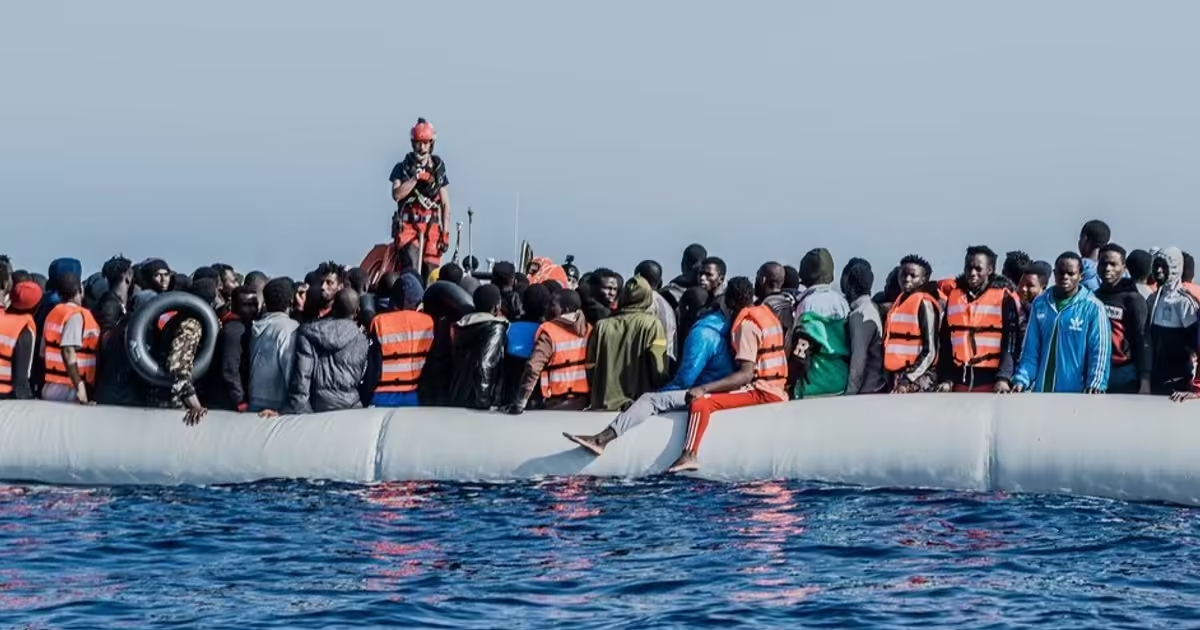

Arrivals from Mali, Senegal, Guinea and The Gambia fell 59% in the first half of 2026 compared with the same period last year, with 4,566 people from the four countries registered arriving in Europe by sea, according to the International Organisation for Migration (IOM).
The West African Atlantic Route, which connects the region to Spain’s Canary Islands, remained the main corridor, accounting for most arrivals involving West African nationals. However, the share of these migrants using Mediterranean routes increased, suggesting that migration patterns are shifting rather than disappearing.
West African nationals accounted for 21.9% of arrivals along the Western Mediterranean Route in the first half of 2026, up from 15.6% in the same period of 2025. Their share of arrivals on the Central Mediterranean Route also rose to 10.5%, from 8.6%.
Longer journeys, greater risks
The changing routes come with potentially deadly consequences. Although arrivals in the Canary Islands dropped 62% between 2024 and 2025, recorded deaths and disappearances remained almost unchanged, declining just 4%, from 1,215 to 1,172, according to IOM data.
Increased controls in traditional departure areas in Morocco, Mauritania and Senegal have contributed to a southward shift towards The Gambia, Guinea and Guinea-Bissau.
Departures from these locations can add as much as 750 kilometres to the crossing, extending some journeys to approximately 2,200 kilometres. Migrants consequently face longer periods at sea, more remote coastlines and greater risks of shipwreck, dehydration and disappearance.
IOM Director General Amy Pope warned that fewer arrivals at one destination do not necessarily mean migration pressures have eased, as people may simply take different routes.
The organisation said continued departures and interceptions show that irregular migration persists despite falling arrivals. It called for stronger regional cooperation, improved protection and reintegration support, and greater efforts to address the economic and social pressures driving migration.
Source: africa.businessinsider.com