



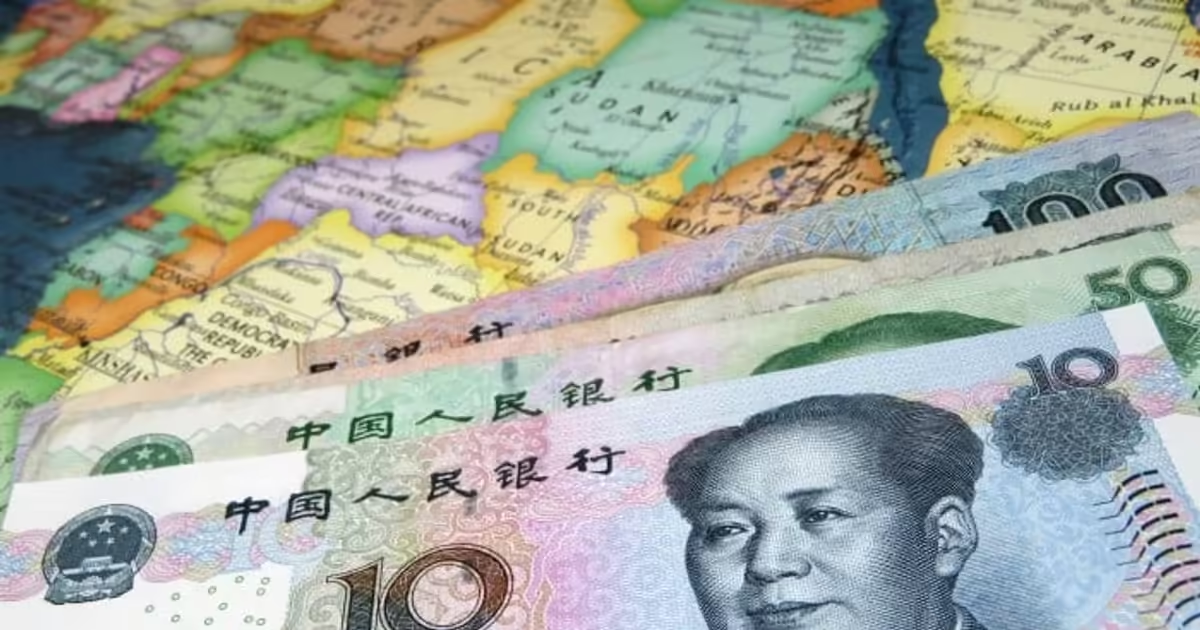

“CIPS is an important part of the infrastructure supporting international RMB payments,” Awori said, adding that the partnership would strengthen links between China’s yuan payment infrastructure and Ecobank’s African banking and payments network.
The move would give the lender access to infrastructure designed to facilitate payments in China’s currency.
As trade between Africa and China expands, demand for alternative payment arrangements that reduce reliance on the US dollar is growing. Beijing is also pushing to internationalise the yuan, encouraging its wider use in global commerce and financial transactions.
Ghana is among the African countries exploring alternatives to dollar-based trade. As Business Insider Africa reported earlier, the country has begun allowing importers to pay for eligible imports from China in cedis, in a move aimed at reducing businesses’ reliance on the US dollar in bilateral trade.
For African businesses, settling transactions directly in yuan could reduce reliance on intermediary currencies such as the US dollar, potentially lowering conversion costs and simplifying payments for importers and exporters trading with China.
African banks respond to growing China trade
China is a major trading partner for African economies, exporting machinery, electronics and consumer goods while importing commodities and raw materials.
As trade grows, banks are investing in payment systems that facilitate cross-border transactions. China’s Cross-Border Interbank Payment System (CIPS) clears and settles yuan payments, potentially helping Ecobank serve customers trading with China.
Ecobank’s planned entry follows moves by South Africa’s Standard Bank and the African Export-Import Bank (Afreximbank), which joined CIPS in 2025. Standard Bank has expanded its services to Angola, Ghana, Kenya, Lesotho and Tanzania, processing more than 8 billion yuan ($1.2 billion) through the system by July 2026.
Greater yuan use does not necessarily mean African businesses will abandon the dollar. Adoption will depend on trade demand, currency availability, transaction costs and banks’ ability to support yuan payments.
Ecobank’s planned agreement adds to efforts to expand yuan payment infrastructure as Africa’s commercial ties with China deepen.
Source: africa.businessinsider.com