




Several studies have investigated the oral health status of pediatric PwH13,14,15,16,17,18. However, studies on the oral health status of adult PwH are rare, and the findings remain subject to debate. Furthermore, no reports have examined the oral function of PwH. To the best of our knowledge, this is the first study to comprehensively evaluate the oral environment and function in adult PwH, including those who are HIV-positive.
This study evaluated the oral function and oral environment in 30 adult PwH. Oral functions were assessed, including the degree of tongue coating, oral bacterial count, salivary flow volume, oral mucosal moisture, occlusal force, lip motor function (“pa”/ “ta”/”ka”), tongue pressure, masticatory function, and swallowing function. On the other hand, the oral environment was assessed using PISA, along with conventional periodontal disease-related parameters, such as BOP, PPD, and PCR. PISA is a comprehensive marker that quantifies the extent of inflammatory lesions within the oral cavity and is calculated from BOP and PPD27. Currently, no globally accepted PISA standard value exists. However, one study has outlined the definitions and classifications for PISA and periodontal disease cases29. PISA values were 2309.42 ± 587.69 mm2 in the severe periodontitis group and 34.30 ± 16.48 mm2 in the periodontally healthy group, with a PISA value ≥ 130.33 mm2 indicating the presence of periodontitis29. In this study, the median PISA value for the participants was 149 mm2, indicating that most participants had early-stage periodontitis. The Dental Disease Status Survey conducted by Japan’s Ministry of Health, Labour and Welfare in 2024 (reported in Japanese only) showed that the average number of missing teeth per person among 45–49-year-old individuals without hemophilia was 0.5 teeth, which is nearly identical to the number of missing teeth in PwH with a similar median age in this study.
According to the Japanese Society of Geriatric Dentistry, individuals with ≥ 3 oral function test results falling outside the standard value are considered to have oral hypofunction21. In this study, 7 participants (23%) were diagnosed with oral hypofunction. This rate is lower than the approximately 40% prevalence of oral hypofunction reported in prior studies of Japanese adults in their 40 s attending private dental clinics30.
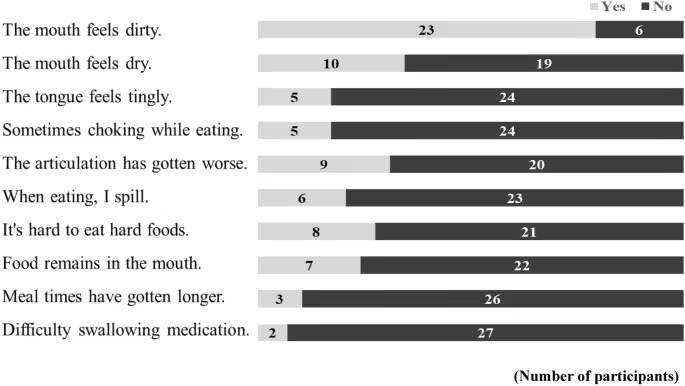
In this study, only the median oral bacterial count deviated from the reference values for oral function tests established by the Japanese Geriatric Dentistry Association in 201821. Interestingly, the survey results showed that 60% of the participants reported feeling that their “mouth was dirty,” and subjective and objective assessments indicated poor oral hygiene. Although an increase in oral bacterial count in PwH was observed, given that the median PCR score among participants was 45%, the possibility that inadequate plaque control played a role cannot be ruled out. Arthropathy is common among PwH and may affect tooth brushing. Increased oral bacterial counts cause not only periodontal disease and dental caries but also aspiration pneumonia31,32. Despite the elevated oral bacterial counts, the PISA values were low, indicating that periodontal inflammation remained at an early stage. This finding suggests a possible discrepancy between oral bacterial accumulation and the progression of periodontal inflammation, highlighting the importance of implementing oral hygiene interventions before clinical signs of inflammation become apparent in order to prevent the progression of periodontal disease. The coexistence of elevated oral bacterial counts and low periodontal inflammation in PwH may reflect several interacting factors. Increased total bacterial load does not necessarily indicate a pathogenic microbiota capable of driving periodontal destruction, and many participants—particularly those receiving ART—maintained stable immune function that may moderate inflammatory responses. Moreover, gingival bleeding associated with hemophilia can occur independently of inflammation, potentially weakening the correlation between bacterial burden and PISA. Regular medical follow‑up may also help suppress inflammatory progression even when plaque control is insufficient. These mechanisms together may explain why bacterial accumulation did not correspond to increased periodontal inflammatory burden in this cohort. Further studies are needed to clarify the relationship between increased oral bacterial counts and the deterioration of oral hygiene status, as well as the associated risk of inflammation.
In this study, the participants were classified into HIV-positive and HIV-negative PwH, and the oral environment and function were compared between the two groups. No significant differences in oral function or environment were observed between the two groups. This finding may be attributable to the fact that all HIV-positive participants maintained a stable immune status (median CD4 count of 512 /mm3 and undetectable HIV) through ART. In addition, both groups shared similar clinical backgrounds as patients with hemophilia, including comparable medical management and oral health-related behaviors, which may have minimized differences between the groups. Furthermore, the relatively limited sample size may have reduced the statistical power to detect subtle intergroup differences. The univariate analysis indicated that the PISA values were significantly lower in HIV-positive PwH than in HIV-negative PwH. However, the multivariate analysis revealed no significant difference. We believe that factors such as oral hygiene practices, access to medical care, and individual differences in inflammatory responses among HIV-positive individuals may account for the lower unadjusted PISA scores.
This study has several limitations. This study was a single-center study with a small sample size. Therefore, given the high uncertainty of the estimates and the possibility of Type II errors, particular caution is required when interpreting the findings regarding the HIV-positive group and the group with oral hypofunction. The interpretation of periodontal examination results was difficult because there were no established reference values for periodontal markers such as PISA. Individuals with HIV often have concomitant arthritis, and motor impairment is associated with a decrease in muscle mass. However, these factors were not investigated in this study. The criteria for oral hypofunction used in this study were developed for the elderly, and there are certain limitations to applying them to a relatively young cohort with a median age of 45 years. Using these criteria may have underestimated the prevalence of oral hypofunction, as age‑related declines are less pronounced in individuals in their 40 s and several test items may be less sensitive in this age group. For adults with hemophilia, assessments related to daily oral hygiene behaviors—such as oral bacterial count, plaque control status, and oral motor function—may be particularly relevant because arthropathy can hinder effective tooth brushing. These considerations suggest that future studies may benefit from developing a hemophilia‑specific assessment framework that incorporates joint function, bleeding tendency, and limitations in oral hygiene behaviors. The sample size in this study is small, and we cannot completely rule out the possibility of overfitting in the logistic regression analysis. Although we limited the number of variables by taking EPV into account, there are limits to the stability of the estimates. Since this study did not include a healthy control group, a direct comparison with systemically healthy individuals is not possible, which limits the generalizability of these findings. Because this study employed a cross-sectional design, it was not possible to establish a causal relationship between oral bacterial count, periodontitis, and clinical characteristics. The assessment of HIV-related clinical conditions was limited, and immunological and therapeutic parameters—such as CD4-positive cell count, viral load, and details of antiretroviral therapy—were not fully evaluated. These factors may influence the progression of periodontitis. Furthermore, this study did not evaluate factors that may influence oral health, such as dental caries risk, access to healthcare services, lifestyle behaviors, and socioeconomic background. Although an increase in oral bacterial count was observed in many participants, caution is warranted when interpreting these results, given the limitations of the study design and sample size constraints. Comparisons with external population-based studies should be considered purely for reference, as the demographic characteristics of the participants, sample size, and assessment methods differed. This exploratory study provides preliminary evidence regarding oral function in PwH. Moving forward, it will be important to conduct a multi-center case registry, establish an age-matched healthy control group, conduct longitudinal follow-up studies, and estimate the required sample size based on the effect sizes obtained in this study. These confirmatory studies will strengthen the scientific foundation for establishing an oral function assessment framework specific to PwH.
Source: www.nature.com