



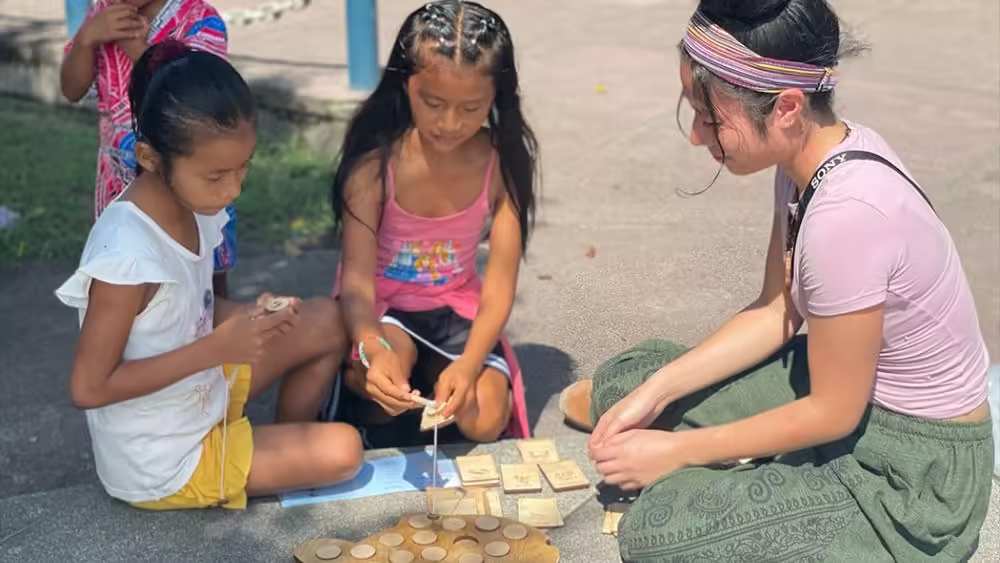

Play was chosen as a way to make complex One Health concepts accessible and engaging for children. The games addressed issues that directly affect the community, including hygiene, disease, nutrition and pollution.
“Games are fun,” Andrews said. “Fun to make, fun to play, fun for learning and effective at remembering.”
The collection included games rooted in Claverito’s culture and environment. “Pánico a las Pirañas” or “Piranha Panic,” inspired by Hungry Hungry Hippos, taught children about the role of piranhas in the Amazon ecosystem. “Pez Misterioso,” or “Mysterious Fish,” used magnetic fishing to teach children about food chains, pollution risks and nutrition.
The students also designed a dollhouse based on Claverito’s traditional floating houses. After observing children playing with a dollhouse that resembled a suburban American home, one student helped develop a version that reflected the children’s own community and culture.
The collaboration included undergraduate students Tyler Atkinson, Achiraya Bangching, Aidan Bastarrika, Delaney Beal, Shanu Gopinathan, Rida Hamid, Isabelle Rodemaker, Madeleine Ryan and Charell Walter, with graduate students Alexis Coyle, Janhavi Rajwade, and Ankita Karmakar, advised by faculty members Rebecca Bachman (landscape architecture), Justin Brown and Jennifer Koehl (veterinary and biomedical sciences), Cara Exten (nursing) and Kari Kugler (biobehavioral health), Peruvian professionals Xiomara Valdivia Zavaleta and Patricia Alarcón, and members of the Claverito community. Support came from the Hamer Center for Community Design, Drew Stewart Popjoy Fund for Travel and Experiential Learning, Stuckeman School, Student Engagement Network, Days for Girls International, One Health Minor Program and the Department of Landscape Architecture at Penn State.
For Walter, a landscape architecture student who graduated in May, the children’s creativity and connection to their environment made an impression to her throughout the fair.
“What stood out to me was how open the children were to trying new games and how creative they all are,” Walter said. “It was also apparent that they all care deeply about their environment.”
Bangching, also a May landscape architecture graduate, said one of the most meaningful moments was seeing the impact the games had on the children.
“Seeing their excitement and knowing my work could bring them joy while helping them learn was incredibly meaningful,” Bangching said.
Source: www.psu.edu