


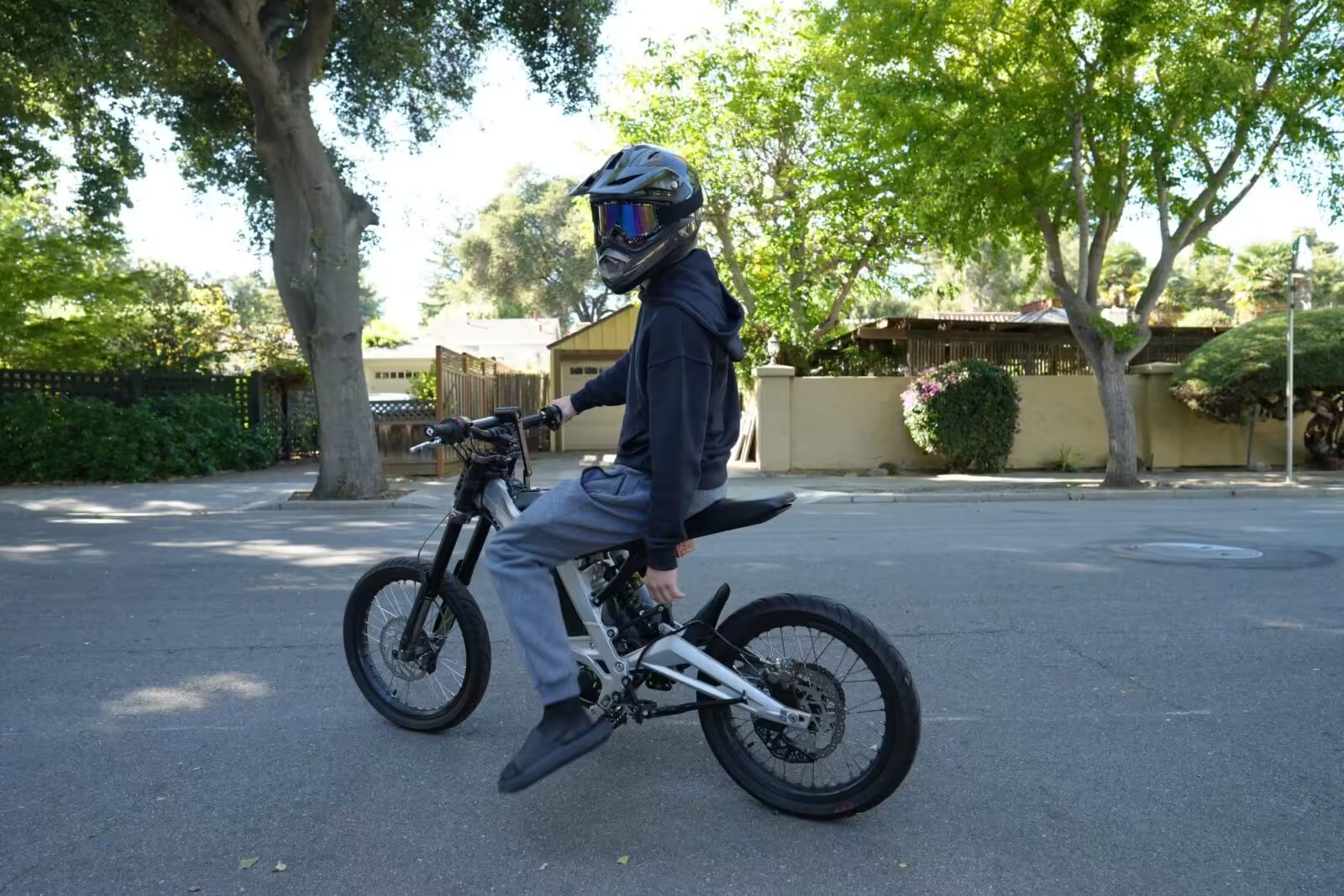

Every school day morning, junior Kyle Chen rides his custom-made electric bike across town to Paly. Like many other students, Chen lives far from campus. To get there, he finds e-bikes the most convenient and efficient mode of transportation.
“I live more than two miles away from school, and so with a regular bike, it would take around more than 15 minutes to get to school every single day,” Chen said. “I was getting a lot of tardies, so I got an e-bike that goes a lot faster.”
As the popularity of E-bikes rises among students as a primary mode of transportation to get to and from school, Karen Gauss, Palo Alto’s Safe Routes to School transportation planner, said police have seen a corresponding increase in accidents.
“The police department in Palo Alto (is) seeing e-bike crashes, and they didn’t see those several years ago,” Gauss said.
Story continues below advertisement
Lieutenant Nicolas Martinez, who oversees administrative services for the Palo Alto Police Department, said e-bike crashes are more common not only locally but throughout the state.
“We see kids of all ages riding e-bikes around town,” Martinez wrote in an email to The Campanile. “As seen in communities across the Bay Area and state, e-bikes have become very popular. When any person riding an e-bike is involved in a collision, the injuries tend to be more serious and severe than those riding conventional pedal bicycles.”
California classifies e-bikes into three categories: Class One, Class Two and Class Three. Class One e-bikes provide motor assistance only while the rider is peddling and stop assisting at 20 mph. Class Two e-bikes also stop assisting at 20 mph but include a throttle that can propel the bike without peddling. Class Three e-bikes provide pedal assistance up to 28 mph and do not have a throttle.
According to the city of Palo Alto website, Class Two and Three e-bikes are banned on campus starting this fall while Class One e-bikes will be banned starting in the fall 2027.
Chen is among the riders who disagree with this ban.
“There’s really no reason to set all these rules on how kids can choose their way to school because it’s not affecting their school,” Chen said. “I just live so far away, and I can’t get a parking permit, so it’s my only way to get to school efficiently.”
Chen does say, though, that some e-bike riders don’t follow the rules.
“The really fast ones are just illegal by themselves, and I see a lot of them just running stop signs, running red lights. They don’t have signals, and they don’t have helmets,” Chen said.
Martinez said police have observed similar unsafe behavior. He noted students riding too fast without helmets, riding with one or more passengers and erratic movements lead to the most accidents.
“(The police have seen students) riding too fast and in an unsafe manner, riding without a proper helmet, riding with one or more passengers on an e-bike,” Martinez wrote. “Erratic movements around other vehicles, unsafe turning movements, and inexperience (lead to the most accidents)”.
Martinez said police cannot issue citations or warnings specific to e-bikes, and he declined to comment further on police enforcement of e-bike rules.
Regardless of how the police handle the situation, Gauss said she does not recommend e-bikes for children and hopes future laws restrict e-bike use.
“We are saying that e-bikes are for adults, and we’re also recommending not purchasing motorized devices for children,” Gauss said. “I realize the state law is lagging behind the city’s recommendation. I don’t have a law that I can cite, but I would say under 18, no motorized device; I’m going to include e-bikes, e-scooters and e-motorcycles.”
Source: thecampanile.org