





UNODC
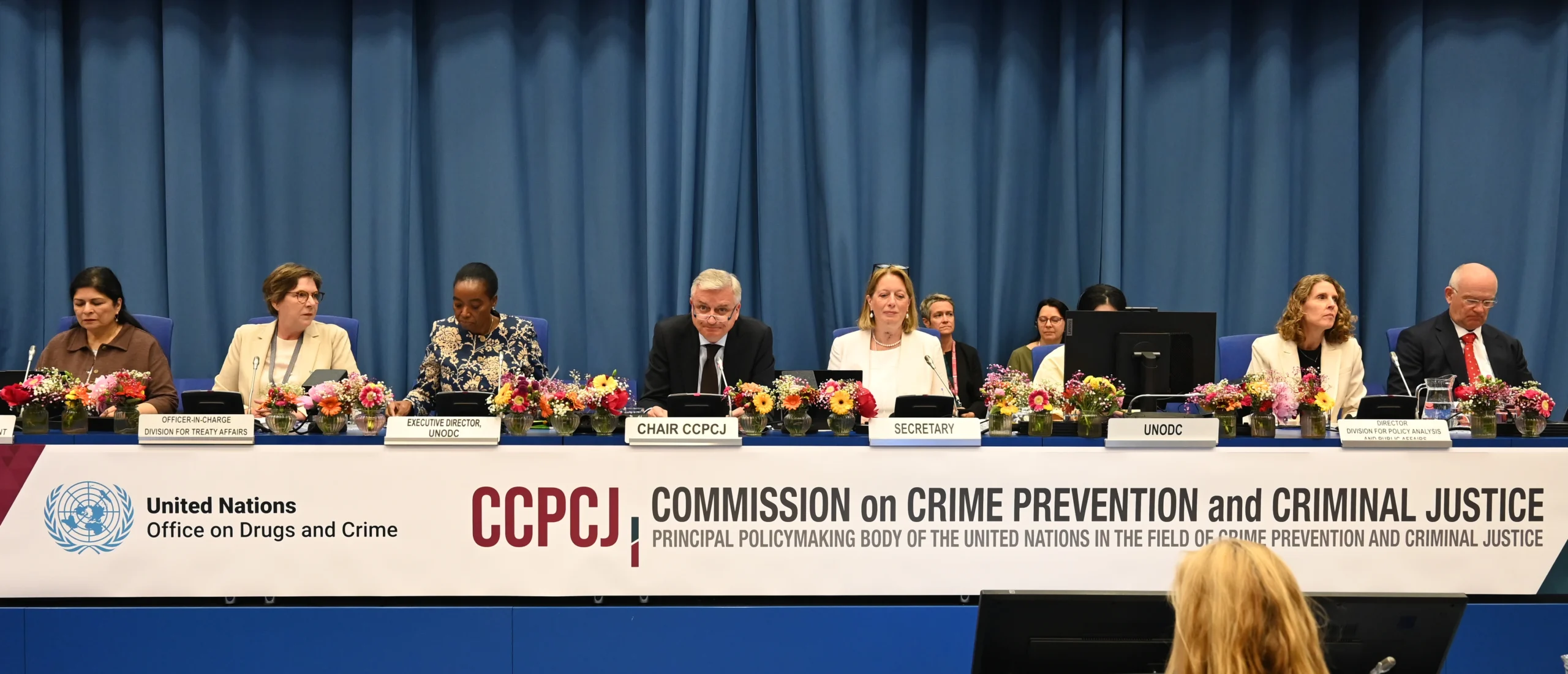
Opening panel of 35th session of CCPCJ
Vienna (Austria), 1 June 2026 – Member States and stakeholders gathered in Vienna today for the opening of the 35th session of the Commission on Crime Prevention and Criminal Justice (CCPCJ) amid growing calls to strengthen international cooperation and adapt criminal justice systems to rapidly evolving threats.
From tackling cyber-enabled fraud and online child exploitation to trafficking in persons and the increasingly sophisticated organized criminal networks operating across borders, participants underscored the urgent need to strengthen international cooperation and ensure that criminal justice systems remain fit for purpose.
Opening the session, Chair of the Commission, H.E. Ambassador Rüdiger Bohn of Germany, welcomed participants to the United Nations’ principal policymaking body in the field of crime prevention and criminal justice. Over the course of the week, the Commission will consider emerging crime trends, review progress in implementing international commitments and discuss practical measures to enhance prevention, law enforcement and judicial cooperation, and access to justice. The session also serves as an opportunity to prepare for the Fifteenth United Nations Crime Congress, to be held in Abu Dhabi in 2026.
The session marked the first address to the Commission by Monica Juma, Executive Director of the United Nations Office on Drugs and Crime (UNODC). Addressing Member States, Ms. Juma described the current moment as an “inflection point”, noting that the foundations of multilateralism are being tested while criminal networks continue to adapt and evolve.
“It is precisely in moments like these that this Commission matters,” she said. “It reaffirms that dialogue is stronger than division.”
Ms. Juma emphasised that the Commission remains an indispensable platform for bringing together governments, practitioners and civil society to address shared challenges and to bridge the gap between international policy and realities on the ground.
In their opening remarks, speakers highlighted the increasingly complex and interconnected nature of contemporary crime. Criminal networks are operating across borders and exploiting technological advances, global connectivity and illicit financial flows to expand their activities and profits.
The Executive Director warned that justice systems are struggling to keep pace with the scale and sophistication of these threats, underscoring the importance of stronger international cooperation and effective multilateral responses.
In a video message, the President of the UN Economic and Social Commission (ECOSOC), H.E. Ambassador Lok Bahadur Thapa of Nepal, echoed these concerns, emphasizing that addressing organized crime, corruption, cybercrime and terrorism is essential for advancing sustainable development and achieving the Sustainable Development Goals.
Turning resolutions into action
The Commission will consider three draft resolutions addressing some of the most pressing and rapidly evolving criminal justice challenges:
- Preventing and combatting transnational sextortion of children;
- Countering trafficking in persons for the purpose of forced criminality; and
- Strengthening crime prevention and criminal justice responses to combat fraud.
Together, these topics reflect the increasingly digital, transnational and interconnected nature of contemporary crime and the growing need for innovative, coordinated and victim-centred responses.
Beyond the plenary discussions, more than 100 side events and 16 exhibitions will bring together policymakers, law enforcement officials, researchers, representatives of international organizations, civil society representatives and young people to exchange experiences and identify practical solutions.
The 35th session of the Commission on Crime Prevention and Criminal Justice takes place from 1 to 5 June 2026 at the Vienna International Centre. Plenary meetings are being webcast live via A Web TV.
Source: www.unodc.org